Why Businesses in Dubai Are Switching to Magento 2 for Enterprise Ecommerce
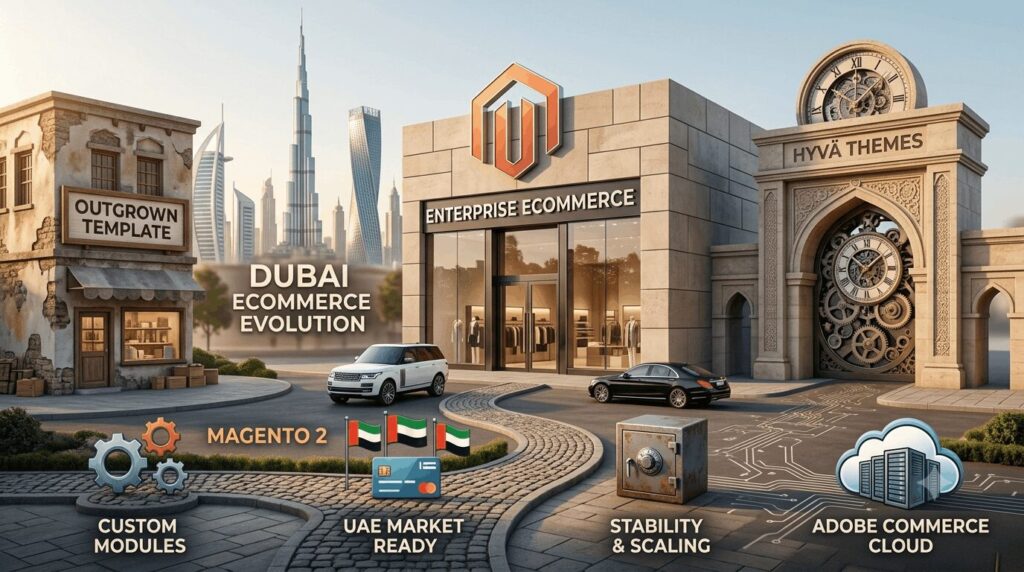
Dubai’s online retail scene doesn’t look like it did five years ago. Back then, a decent-looking storefront was enough to compete. Now brands are fighting over milliseconds of page load time, checkout friction, and whether their site can survive a traffic spike during Ramadan sales without falling over. That’s the backdrop for why so many retailers are now calling up a magento development company in Dubai instead of sticking with a template-based platform they’ve already outgrown.
Magento 2, now sold under Adobe Commerce, isn’t the easiest platform to get right. It’s not the cheapest either. But for businesses that need real control over how their store works, not just how it looks, it’s still one of the few platforms built to actually handle that.
The UAE Market Isn’t Like Anywhere Else
Selling online in the UAE comes with its own checklist. Bilingual storefronts, VAT compliance, local shipping integrations with Aramex or Emirates Post, and payment options like Tabby and Tamara aren’t nice-to-haves, they’re what customers expect by default. This is a big part of why brands go looking for a magento development company in Dubai rather than handing the project to an overseas agency that’s never actually built for this market.
A team that’s already done this work locally isn’t starting from zero. They know which shipping APIs actually behave, which payment gateways cause the most support tickets, and what a bilingual checkout flow needs to look like so it doesn’t confuse customers halfway through. That local experience saves weeks that would otherwise get burned explaining basic market requirements to a team learning the region for the first time.
Why Magento Specifically
Shopify works fine for a lot of stores, until the catalog gets complicated, the pricing logic needs to be custom, or the checkout has to do something Shopify simply wasn’t built to do. That’s usually the point where businesses start looking at Magento 2. It hands developers full control over the backend, which is exactly why so many growing brands eventually migrate over.
A solid Magento 2 development company usually runs this migration in stages: auditing what already exists, mapping out which custom modules need rebuilding, moving product and customer data without breaking anything, and load-testing before the store ever goes live. Skip any of those steps and you risk losing SEO rankings or, worse, taking the store down during a busy sales period.
What Store Owners Actually Ask For
Ask any Magento 2 development company what clients request most and you’ll hear the same handful of things over and over: faster pages, a cleaner checkout, better mobile performance, and integrations that connect the store to whatever ERP or inventory system the business already runs on. None of that comes from installing a theme off the shelf. It comes from custom Magento development services built around how the business actually operates day to day.
This is also where the gap shows between an average agency and the best Magento development company in a given market. Anyone can install a few extensions and call it done. Far fewer teams can build something that stays fast and stable once the catalog hits tens of thousands of products, or when traffic triples overnight during Dubai Shopping Festival.
Why Custom Beats Off-the-Shelf
There’s a pattern among UAE retailers who’ve actually scaled well: they don’t lean on stacking extension after extension to patch missing features. They invest in custom Magento development services from day one, building things like loyalty programs or B2B portals directly into the platform instead of bolting on a plugin that half-works. It costs more up front. It also avoids the mess that comes from running a dozen third-party plugins that were never designed to talk to each other.
Stores built this way age better too. When Adobe pushes a platform update, clean custom code adapts without much drama. A store held together with conflicting plugins usually breaks something.
Picking the Right Partner
If you’re vetting a magento development company in Dubai, a few questions separate the serious teams from the rest pretty quickly. Ask about their experience with UAE-specific payment and shipping setups. Ask how they test performance before launch, not after. Ask to see real Magento website development services they’ve delivered for businesses your size, not just a polished demo store built to impress in a pitch meeting.
Support matters just as much. Magento stores aren’t a “build it and walk away” project. They need ongoing security patches and periodic performance checks, especially as Adobe keeps pushing more of its Commerce product toward the cloud.
Where Hyvä Comes In
A lot of businesses talking to a magento development company in Dubai these days are also asking about Hyvä theme development. Makes sense. Hyvä strips out the heavy frontend layers older Magento themes carry and replaces them with something lighter and faster. For UAE brands trying to win on mobile speed during high-traffic sale periods, it’s become one of the more practical upgrades on the table right now.
The Bottom Line
Dubai’s ecommerce market has grown past what cookie-cutter platforms can handle. That’s the real reason established and growing brands keep choosing a magento development company in Dubai with WebbyTroops Technologies that understands the platform and understands what selling in the UAE actually requires. Whether it’s a full Magento 2 migration, custom feature builds, or a speed overhaul with Hyvä, the brands seeing real results treat their store as core infrastructure, not just a website they launched once and forgot about.