How Secure Media Disposal Protects Organizations From Data Breaches
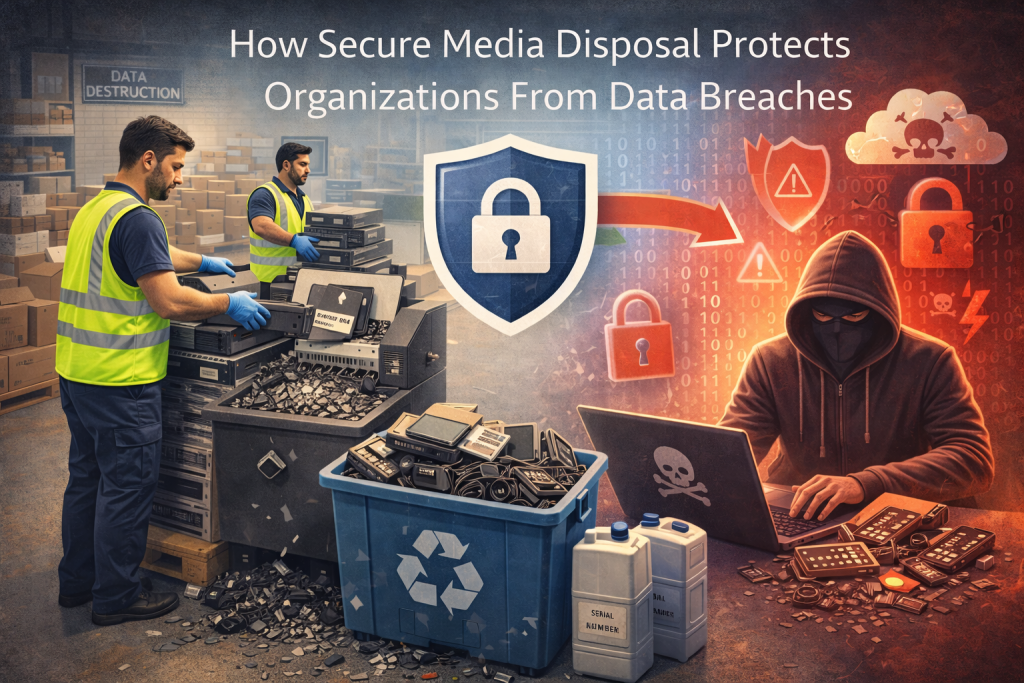
Data breaches increasingly originate from improperly discarded storage media rather than active cyberattacks. Hard drives, tapes, and removable devices often retain sensitive information long after operational use ends.
Engaging a certified data destruction service ensures that obsolete media is permanently neutralized before it becomes a liability for the organization.
The Hidden Risks of Retired Storage Media
Retired storage devices often contain confidential business, employee, or customer information that remains accessible if not handled correctly. Organizations that overlook secure disposal expose themselves to risks that extend beyond IT systems.
- Residual Data Exposure
Deleted files frequently remain recoverable on storage media. Without proper destruction, this residual data can be extracted using readily available tools. Such exposure can lead to financial loss, reputational damage, and regulatory consequences. - Unauthorized Access During Storage
Decommissioned media stored without controls may be accessed by unauthorized individuals. Weak storage oversight increases the risk of internal misuse or accidental data leakage. Secure disposal eliminates prolonged exposure windows. - Regulatory Non-Compliance
Many data protection frameworks mandate secure disposal of sensitive information. Failure to meet these obligations can result in penalties and mandatory disclosures that impact stakeholder trust. - Third-Party Handling Risks
Media passed through unverified vendors or informal channels can lose traceability. A lack of oversight increases the likelihood of mishandling or resale, creating unmonitored data exposure points. - Long-Term Brand Impact
Data breaches associated with poor disposal practices undermine confidence among clients and partners. Restoring credibility after such incidents often requires significant time and resources.
Secure Media Disposal as a Risk Mitigation Measure
Secure media disposal provides organizations with a controlled method to eliminate data risks associated with end-of-life storage devices. This process integrates physical, procedural, and documentation safeguards.
Organizations that rely on a certified data destruction service benefit from standardized processes that ensure irrecoverable data elimination. These services apply approved destruction methods, maintain chain-of-custody controls, and deliver verifiable proof of destruction. As a result, businesses reduce exposure to data breaches while aligning with governance requirements.
- Standardized Destruction Protocols
Certified providers follow defined destruction methodologies. These protocols ensure consistency across different media types and organizational locations. - Controlled Chain of Custody
Media is tracked from collection through destruction. This traceability prevents unauthorized handling and supports accountability. - Verification and Certification
Destruction certificates validate that data has been permanently destroyed. These records support audits and compliance reviews. - Risk Reduction Across Asset Lifecycles
Secure disposal closes the final gap in data protection strategies. It ensures data security extends beyond operational use. - Operational Efficiency
Outsourced secure disposal allows internal teams to focus on core activities. It also streamlines compliance management.
Compliance Alignment Through Secure Disposal
Regulatory compliance is a primary driver for secure media disposal programs. Organizations must demonstrate that sensitive data is protected throughout its lifecycle, including disposal.
- Data Protection Regulations
Laws governing personal and corporate data require organizations to prevent unauthorized access. Secure disposal satisfies these obligations by ensuring data cannot be reconstructed. - Audit Readiness
Documented disposal processes support regulatory audits. Clear records demonstrate adherence to established standards and internal policies. - Industry-Specific Requirements
Certain sectors face stricter disposal rules due to the nature of their data. Secure disposal helps meet sector-specific compliance expectations. - Policy Enforcement
Disposal procedures reinforce internal data governance policies. They ensure consistent application across departments. - Reduced Legal Exposure
Proper disposal lowers the likelihood of legal disputes linked to data mishandling. This protects organizations from long-term liabilities.
Data Destruction Methods and Media Types
Different storage media require tailored destruction approaches to ensure data is fully neutralized. Selecting appropriate methods is essential for effective risk prevention.
- Physical Destruction Techniques
Media can be shredded, crushed, or pulverized to render it unusable. These methods provide visible assurance of destruction. - Magnetic Media Neutralization
Tapes and disks require specific processes to disrupt stored data. Proper handling prevents data remnants from persisting. - Solid-State Media Challenges
Solid-state devices store data differently from traditional drives. Specialized destruction techniques ensure complete data elimination. - Bulk Media Processing
Large volumes of media require controlled batch processing. Structured workflows maintain efficiency without compromising security. - Documentation of Methods Used
Recording destruction methods adds transparency. It confirms that appropriate techniques were applied for each media type.
Regional Expertise and Secure Disposal Practices
Organizations operating in regulated markets often seek providers offering certified data destruction service in Dubai to align disposal practices with regional standards. These services understand local compliance expectations, documentation norms, and environmental regulations, ensuring secure and lawful disposal.
- Regional Regulatory Knowledge
Providers with local expertise stay informed about evolving requirements. This knowledge reduces compliance gaps. - On-Site and Off-Site Options
Flexible service models accommodate different operational needs. Organizations can choose the level of oversight required. - Environmental Responsibility
Secure disposal is often integrated with responsible recycling practices. This supports sustainability objectives. - Operational Scalability
Local providers can support organizations of varying sizes. Scalability ensures consistent service quality. - Clear Communication Channels
Proximity enables responsive coordination. Timely updates strengthen trust and transparency.
Embedding Secure Disposal Into Organizational Strategy
Secure media disposal should be embedded into broader information security and risk management strategies. This integration ensures long-term resilience.
- Cross-Functional Coordination
IT, compliance, and operations teams must align on disposal policies. Coordination ensures consistent execution. - Employee Awareness
Training programs educate staff on disposal responsibilities. Awareness reduces accidental data exposure. - Continuous Process Review
Regular evaluations ensure disposal practices remain effective. Adjustments address emerging risks. - Leadership Oversight
Executive involvement reinforces accountability. Leadership support drives organizational adherence. - Alignment With Security Frameworks
Disposal practices complement existing security controls. This alignment strengthens overall protection.
Conclusion
Secure media disposal plays a vital role in protecting organizations from data breaches that originate beyond active IT systems. By ensuring that obsolete storage devices are handled with verified processes, businesses close a critical gap in their data protection strategy.
Organizations seeking a certified data destruction service in Dubai benefit from structured, compliant, and traceable disposal practices that reduce legal and operational risk. Working with an experienced provider such as Planet Green Recycling (L.L.C) enables organizations to safeguard sensitive information, meet regulatory obligations, and maintain stakeholder trust throughout the complete data lifecycle.